
Teeth Whitening in Singapore
Overview
Teeth whitening is a conservative cosmetic procedure used to reduce extrinsic staining and lighten the natural shade of enamel. Over time, changes in tooth colour may occur due to dietary exposure, ageing, smoking, or intrinsic structural variation within enamel and dentine.
Whitening may be considered when discolouration becomes more apparent or when shade refinement is planned as part of a broader aesthetic sequence, such as alignment or restorative treatment.
Assessment is performed prior to whitening to evaluate enamel condition, gum health, existing restorations, and baseline shade. Suitability and expected range of improvement are discussed before treatment proceeds.
Clinical Assessment and Shade Planning
Whitening is not performed in isolation from overall oral health.
During assessment, the following are evaluated:
- Current tooth shade and uniformity
- Presence of restorations that will not change colour
- Enamel integrity and surface condition
- Gum health and sensitivity history
- Bite patterns where relevant
Shade documentation may be recorded before treatment to provide a reference for post-treatment review.
In some cases, scaling and polishing may be recommended prior to whitening to remove surface deposits that could affect shade uniformity. This is not mandatory in all cases but may improve predictability.
Types of Whitening Available
In-Clinic Whitening
(Philips Zoom, Opalescence)
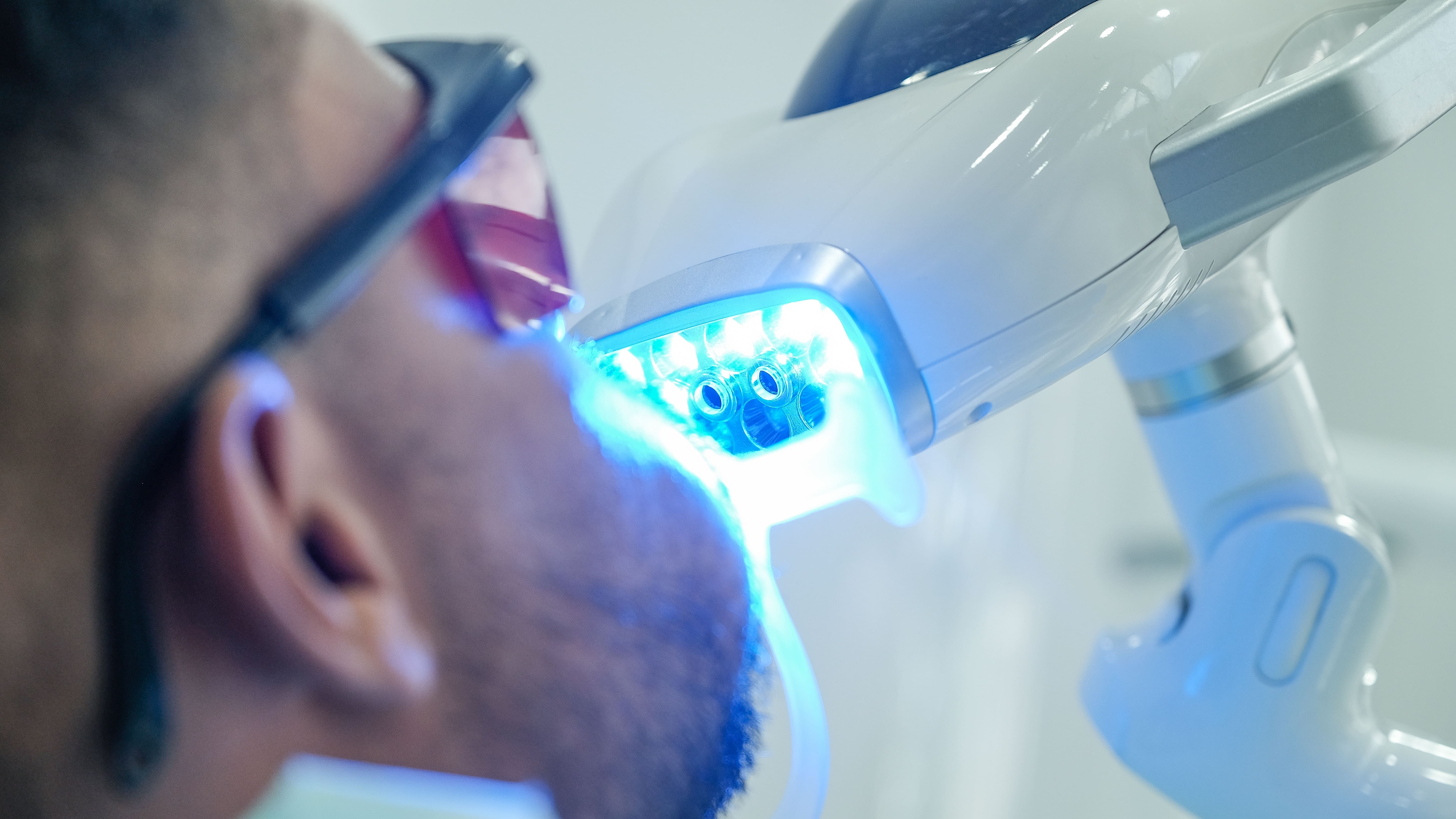
In-clinic whitening is performed under clinical supervision using whitening systems such as Philips Zoom and Opalescence. Protective measures are applied to the gums before whitening gel is activated in controlled cycles.
This option may be considered where more immediate shade improvement is desired or when whitening forms part of a structured aesthetic timeline.
Custom Take-Home Whitening Trays
Custom trays are fabricated using impressions or digital scans to ensure close adaptation to tooth surfaces. Patients apply whitening gel at home over a prescribed duration.
This method allows gradual shade adjustment and may be suitable for individuals who prefer progressive refinement.
Combined Whitening Protocol
In selected cases, an in-clinic session may be followed by take-home trays to maintain or extend shade adjustment under supervision.
The choice of approach depends on baseline shade, sensitivity history, and individual preference.
Expected Outcomes and Limitations
Whitening affects natural enamel and dentine. Existing crowns, veneers, and composite restorations will not change colour.
The degree of shade change varies between individuals and depends on baseline tooth colour, enamel thickness, intrinsic staining, and lifestyle habits.
Where significant intrinsic discolouration is present, alternative restorative options may be discussed.
Sensitivity and Safety Considerations
Some individuals experience temporary tooth sensitivity during or shortly after whitening. This typically resolves without intervention.
Whitening may be deferred in the presence of active decay, untreated gum disease, significant enamel defects, or unstable restorations.
A clinical assessment determines whether whitening is appropriate or whether preliminary management is required.
Longevity and Maintenance
Shade stability varies based on lifestyle factors and oral hygiene.
Staining beverages, smoking, and natural ageing may influence long-term colour. Maintenance options may include periodic review or supervised top-up use of whitening trays where appropriate.
Where whitening forms part of a broader aesthetic plan, sequencing is structured to support long-term stability.
Considering Teeth Whitening?
If tooth discolouration has become more noticeable, or if whitening is being considered as part of a broader alignment or restorative plan, a clinical assessment allows suitability and sequencing to be evaluated.
Discussion includes baseline shade, expected range of improvement, and whether whitening should be performed independently or integrated into a structured treatment plan.
Appointments may be arranged for consultation and assessment where appropriate.
At Artisan Dental, teeth whitening planning is guided by Dr Natasha Lee, with suitability assessed in relation to enamel condition, existing restorations, sensitivity risk, and the wider aesthetic context.
Where visible shade differences remain after whitening, alternative aesthetic options such as aesthetic bonding may be discussed in selected cases.
Where multiple aesthetic factors are involved — such as alignment, shade, shape, or restoration planning — whitening may form one part of a broader smile makeover approach rather than being viewed in isolation.
Frequently Asked Questions About Pemutihan Gigi
The longevity of whitening results varies depending on dietary habits, smoking, oral hygiene, and natural enamel characteristics. Individuals who regularly consume staining beverages may notice gradual shade relapse over time. Maintenance protocols, including supervised tray use, can be discussed during review visits.
Whitening affects natural enamel and dentine only. Existing restorations such as crowns, veneers, or composite fillings will not change colour. If visible shade differences remain after whitening, replacement of certain restorations may be discussed to improve uniformity.
Patients with a history of sensitivity may still proceed with whitening, though adjustments to concentration or protocol may be recommended. Sensitivity is typically temporary and monitored during treatment planning.
Scaling is not mandatory in all cases. However, if visible plaque, tartar, or surface staining is present, cleaning is recommended to allow more even gel contact, deeper penetration and shade evaluation.
Whitening may be sequenced before, during, or after aligner therapy depending on treatment planning. In some cases, whitening is performed after alignment to ensure uniform shade once final tooth position is achieved.
Shade improvement depends on baseline tooth colour, enamel thickness, and biological response. While visible lightening is common, the extent of change varies and is discussed during assessment.