
Wisdom Tooth Surgery in Singapore
Overview
Wisdom teeth, also known as third molars, are the final set of molars that typically emerge in late adolescence or early adulthood. In some individuals, they erupt without complication. In others, limited space or angulation may lead to partial eruption, impaction, or recurrent inflammation.
When a wisdom tooth cannot erupt into a functional position, it may contribute to pain, gum infection, decay of adjacent teeth, or pressure effects within the jaw. Surgical removal is considered when structural positioning or recurrent symptoms indicate that long-term stability cannot be achieved.
The decision to remove a wisdom tooth is guided by clinical findings and radiographic evaluation rather than age alone.
Clinical Assessment and Case Selection
Not all wisdom teeth require removal.
Assessment includes evaluation of eruption pattern, angulation, proximity to adjacent teeth, and radiographic relationship to anatomical structures such as nerves and sinuses.
Symptoms such as recurrent gum inflammation, swelling, difficulty cleaning the area, or decay affecting adjacent molars may indicate compromised positioning. Even in the absence of acute pain, radiographic findings may reveal structural concerns that warrant discussion.
Where wisdom teeth are fully erupted, stable, and maintainable with proper hygiene, monitoring may be appropriate instead of removal.
Surgical Procedure and Technique
Wisdom tooth surgery varies in complexity depending on depth of impaction and angulation.
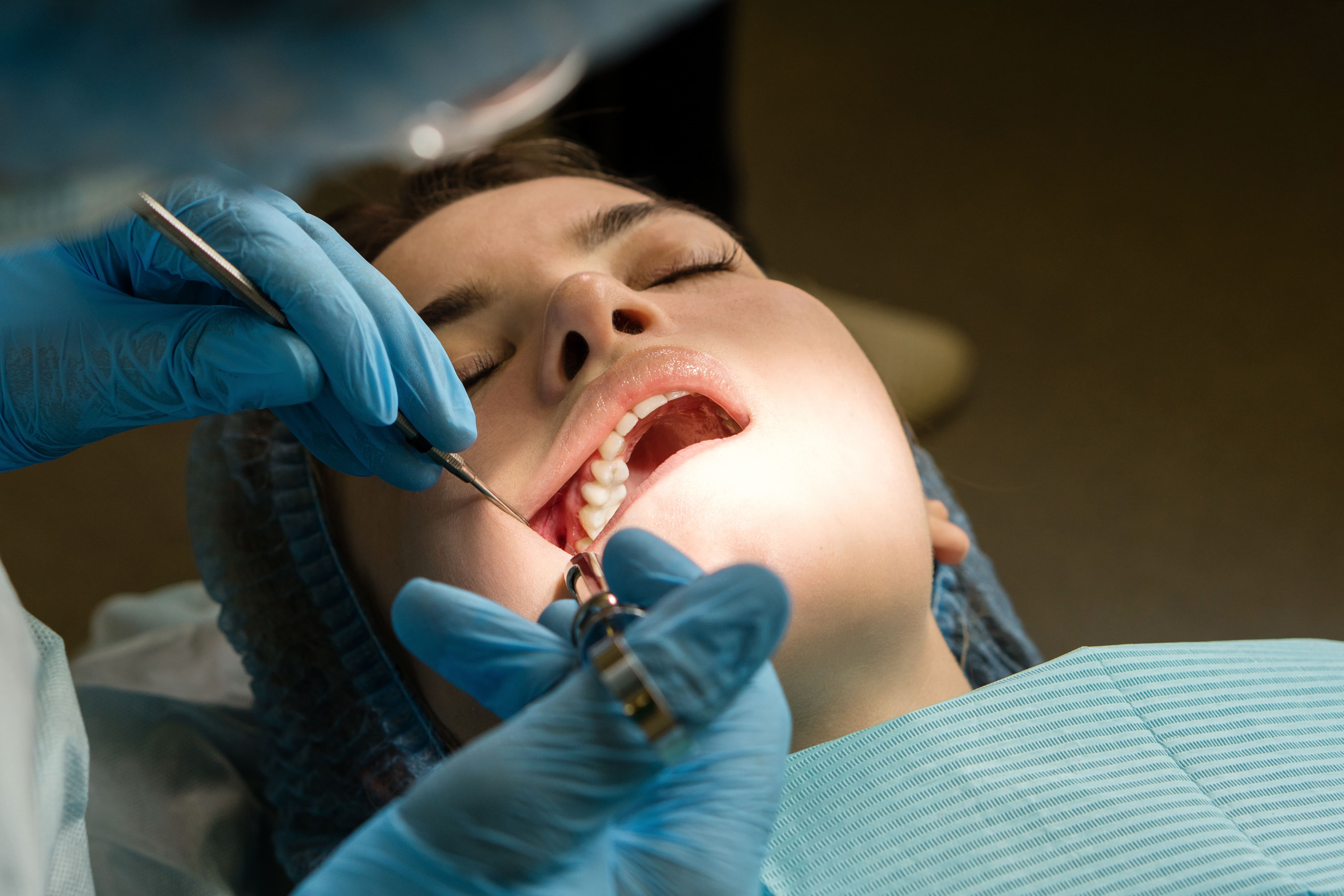
For fully erupted teeth, removal may resemble a standard extraction. For impacted teeth embedded within bone or partially covered by gum tissue, a surgical approach is required. This may involve controlled access to the tooth, sectioning where necessary, and careful removal to minimise trauma to surrounding structures.
The procedure is performed under appropriate anaesthesia. Surgical planning considers proximity to nerves, sinus cavities, and adjacent tooth roots.
Post-operative instructions are provided to support healing and reduce risk of complications.
Functional and Anatomical Considerations
Impacted wisdom teeth may exert pressure on adjacent molars, increasing the risk of decay or periodontal compromise in neighbouring teeth. Partially erupted teeth may trap food and bacteria, leading to recurrent inflammation known as pericoronitis.
Anatomical proximity to the inferior alveolar nerve or maxillary sinus is evaluated through imaging prior to surgery. Risk discussion forms part of pre-operative assessment, particularly where roots are positioned near vital structures.
Surgical planning aims to minimize disruption while ensuring complete removal where indicated.
Recovery and Healing
Healing time varies depending on surgical complexity and individual response.
Swelling and mild discomfort are common in the initial post-operative period. Instructions regarding diet, oral hygiene, and activity are provided to reduce the risk of complications such as infection or dry socket.
Follow-up review may be arranged where necessary to assess healing progression.
When Wisdom Tooth Removal May Not Be Necessary
Wisdom teeth that are fully erupted, properly aligned, and maintainable with oral hygiene may not require removal.
In some cases, asymptomatic impacted teeth may be monitored with periodic radiographic review if no structural risk is present. Decisions are individualised based on anatomical findings and risk assessment.
Considering Wisdom Tooth Surgery?
If recurring pain, swelling, or difficulty cleaning around the back molars has become noticeable, assessment allows structural positioning and potential risk to adjacent teeth to be evaluated.
Discussion includes surgical complexity, anatomical considerations, recovery expectations, and whether monitoring may be appropriate instead of removal.
Appointments may be arranged for consultation and assessment where appropriate.
Frequently Asked Questions About Operasi Gigi Bungsu
Not all wisdom teeth require removal. Fully erupted teeth that are functional and maintainable may be monitored. Removal is considered where positioning increases risk of infection, decay, or structural compromise.
The procedure is performed under appropriate anaesthesia. Post-operative discomfort varies depending on surgical complexity and individual healing response. Instructions are provided to manage recovery.
An impacted wisdom tooth is one that cannot erupt fully into the mouth due to limited space or angulation. It may remain partially covered by gum tissue or embedded within bone.
Potential risks include swelling, infection, dry socket, and temporary or rarely persistent nerve-related sensations depending on anatomical proximity. Risk level varies according to tooth position and is discussed during assessment.
Initial recovery typically occurs within several days, though complete healing of the surgical site may take longer. Recovery duration depends on depth of impaction and surgical complexity.
Delaying removal in cases where structural compromise exists may increase risk of infection, adjacent tooth decay, or periodontal damage. However, asymptomatic teeth may be monitored when appropriate.
Return to routine activity depends on surgical complexity and individual comfort levels. Many patients resume light activity within a short period, though strenuous activity may be postponed temporarily.